
20 Best AI Chatbots for Lead Generation in 2026
If you’re in Sales, RevOps, CX, or building voice/AI chatbots, you will already know this: the era of passive forms is over.
Lead-generation is now conversational, 24/7, personalised and instant.
This means 2 things:
- first interactions become qualifying gates not just capture forms.
- chatbots aren’t stand alone they need proper context.
This is my list of banger lead gen tools including Dialshark, Chatbase, Vapi, Landbot, Manychat.. this list will help you choose the right AI chatbot so you can build an agent that generates you more leads at lower cost.
Here are my favourite 20 AI chatbots / voicebots for lead generation in 2026:
1. Dialshark
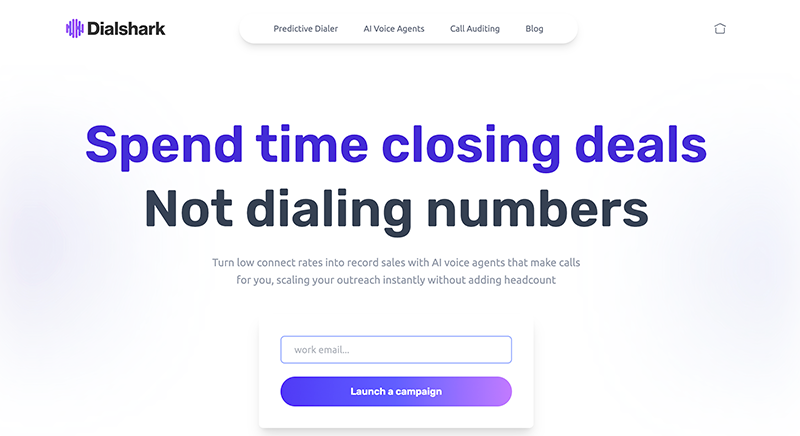
Combining AI voice agents, a predictive dialer, and call auditing results in more focused, better-qualified conversions. This makes Dialshark a strong choice for rapidly scaling lead generation campaigns.
Dialshark focuses on high volume dialling to help sales teams scale outreach without additional headcount. Its pay‑as‑you‑go model is attractive but may limit adoption for non‑phone channels.
| 🔍 Overview | Dialshark is an AI-powered predictive dialer that automates outbound calls by detecting voicemails, skipping bad numbers, and routing live answers to reps — effectively turning wasted dials into booked conversations. |
| ✨ Features | Automated voice agents that can call hundreds of leads simultaneously, qualify them in-call, and transfer interested prospects to human reps or book meetings; predictive dialer skips voicemails/bad numbers; real-time analytics and lead routing built for sales teams. |
| 💰 Pricing | Pricing is usage based and in the range of £0.16ppm. Users can contact Dialshark for customised plans based on call volume and contact list size. |
| ✅ Pros | Highly specialised for outbound sales teams needing massive scale; automates lead-dialing burden; improves conversion by reaching live contacts faster. Clients get white glove treatment. |
| 🔴 Cons | Geared heavily toward outbound voice campaigns (may not fit inbound or chat-only scenarios); unclear pricing transparency, (must contact them for better rates depending on call volume). |
| 💬 User Insights | Users are saying that using Dialshark is like an enterprise solution for the little guy. They work with you to prove a successful lead generation voice agent. Users love the ability to scale to 100s of live agents, but would like to see more features. |
| 🔥 Best For | Outbound sales teams, call-centres and B2B organisations with large lead volumes who want to automate dialing and convert live connections faster. |
2. ElevenLabs
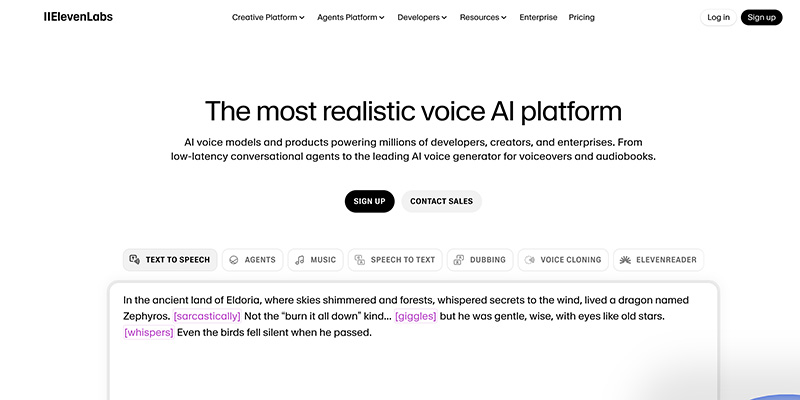
ElevenLabs stands out for ultra‑realistic voice synthesis, offering granular credit‑based plans from free to enterprise tiers.
However, its unpredictable billing and hidden overages have drawn criticism; Users praise voice quality while lamenting accent handling and credit confusion when it comes to billing.
| 🔍 Overview | AI voice‑generation platform offering text‑to‑speech, speech‑to‑speech, dubbing, voice cloning and conversational agents for developers and creators. |
| ✨ Features | Generates realistic voices in 70+ languages; supports voice cloning, dubbing, sound effects and AI agents; API for integrating voice into apps; extensive credit‑based system. |
| 💰 Pricing | Free plan (10 k credits/month); Starter $5 /mo (30 k credits); Creator $11 /mo ($22 monthly with 100 k credits); Pro $99 /mo (500 k credits); Scale $330 /mo (2 M credits); Business $1 ,320 /mo (11 M credits). Pricing is usage‑based with credits; hidden costs for overages and voice‑licensing noted in third‑party guides. |
| ✅ Pros | Industry‑leading voice quality; wide range of voice and dubbing features; flexible API; multiple plans including free tier. |
| 🔴 Cons | Credit‑based pricing can make costs unpredictable for businesses; additional fees for custom voices and overages; some users report accent issues and quality variance. |
| 💬 User Insights | Users praise ElevenLabs for realistic voice cloning but complain about accent handling and raspiness; some report confusion over credit usage and billing unpredictability. |
| 🔥 Best For | Developers and content creators who need lifelike voices and flexible APIs; enterprises that can manage variable usage costs. |
3. Vapi
Vapi provides a configurable platform for developers to build voice AI agents, with usage‑based pricing and powerful customisation.
Its flexibility comes at the cost of complexity and hidden fees from third‑party providers, making it best suited for technical teams comfortable managing multiple services.
| 🔍 Overview | Developer‑focused platform for building advanced voice agents; provides infrastructure to deploy voice bots over phone, SMS and chat. |
| ✨ Features | Pay‑as‑you‑go pricing; includes call concurrency (10 lines with $10 per extra line), calls at $0.05/min, SMS at $0.005/msg; offers call history retention, HIPAA‑compliant add‑ons, SLA options and configurable model providers. |
| 💰 Pricing | Usage‑based: $0.05 per minute for calls plus additional charges for third‑party speech/LLM services; HIPAA zero‑data‑retention add‑on costs $1 ,000/month. External analyses note true costs can reach $0.13–$0.31 per minute when third‑party services are added. |
| ✅ Pros | Highly configurable and developer‑friendly; allows custom SIP connections and model providers; simple pay‑as‑you‑go with $10 free credit; infrastructure designed for scale. |
| 🔴 Cons | Costs add up when adding third‑party services; HIPAA compliance is expensive; requires technical expertise to manage providers; pricing complexity can surprise non‑developers. |
| 💬 User Insights | Users on r/vapiai discuss combining Vapi with tools like GoHighLevel and Twilio; inbound call rates are very low (≈$0.0079), but outbound calls require bundling multiple services and may cost $400+ for clients. |
| 🔥 Best For | Developer‑led teams building custom voice agents, call routing or IVR systems; companies comfortable managing multiple vendors and variable pricing. |
4. Drift
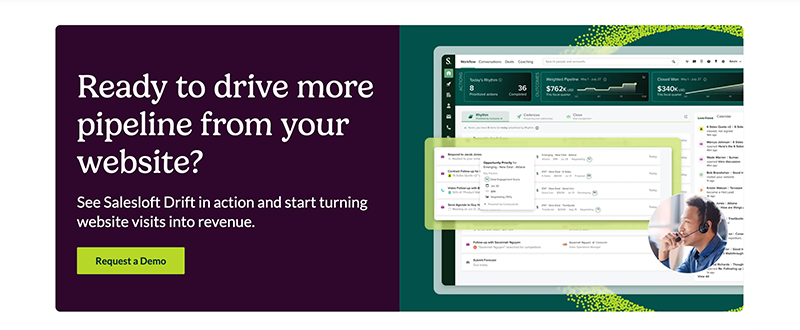
Drift offers real‑time chat and conversational marketing but commands premium pricing (starting around $2,500/month) that may only be justified for larger B2B firms.
User feedback suggests its live chat is effective if a human team is available but warns that the free tier is too limited.
| 🔍 Overview | Conversational marketing platform (now part of Salesloft) that uses live chat and AI chatbots to engage website visitors, qualify leads and schedule meetings. |
| ✨ Features | Real‑time chatbots and live chat; conversational landing pages; meeting booking; real‑time notifications; integration with CRM and marketing tools; pipeline acceleration. |
| 💰 Pricing | Premium plan starts around $2,500/month (billed annually) with Advanced and Enterprise tiers available via custom quotes. Free trial available but no free tier. |
| ✅ Pros | Excellent real‑time engagement; custom bots and meeting scheduling; integrates into sales/marketing workflows; strong reputation in B2B SaaS. |
| 🔴 Cons | Very expensive for SMBs; pricing lacks transparency; limited AI‑first features compared to newer platforms; requires staffing for live chat; long sales cycles. |
| 💬 User Insights | Marketers say Drift’s live chat is great for e‑commerce when a staff member can respond, but note the price is steep and free plan is limited. |
| 🔥 Best For | Established B2B companies with budgets for high‑touch conversational marketing; teams that need real‑time chat to qualify leads and book meetings. |
5. Chatbase
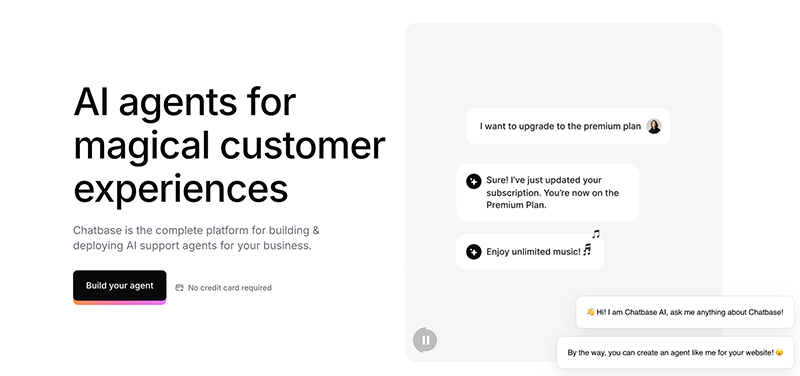
Chatbase targets SMBs seeking no‑code chatbot deployment. It provides multiple AI models, robust integrations and affordable entry plans.
Yet, its various add‑ons can quickly raise costs, and users report issues with hallucinations and limited effectiveness for revenue‑generating conversations.
| 🔍 Overview | No‑code AI chatbot platform that lets users train chatbots on their own documents/links and embed them on websites; supports multiple AI models. |
| ✨ Features | Free plan with 100 message credits/month and 1 AI agent; Hobby plan ($40/mo) with 2 k credits and 5 actions/agent; Standard plan ($150/mo) with 12 k credits and 10 actions; Pro plan ($500/mo) with 40 k credits and 15 actions; enterprise plan available. Supports unlimited website embeds, multiple AI models (OpenAI, Anthropic, Gemini, Cohere, etc.), API access and integrations (Zapier, Slack, WordPress, WhatsApp, Messenger, Instagram, Zendesk). Add‑ons include auto‑recharge credits ($14 per 1 k), extra agents ($7/mo), custom domains ($59/mo) and removing branding ($39/mo). |
| 💰 Pricing | Free to $500/month depending on plan; add‑on fees can significantly increase cost. |
| ✅ Pros | Quick to set up; no coding required; flexible training via URLs or docs; broad integration support; multiple AI models; trusted by thousands of businesses. |
| 🔴 Cons | Hidden costs for extra agents, credits and custom domains; message credits and training size limits; some users report hallucinations and limited customization; advanced features require Pro plan; reviews note it’s good for FAQs but less effective for revenue generation. |
| 💬 User Insights | Reddit users appreciate its simplicity and ability to spin up FAQ bots, but criticize its inability to handle complex queries and steep pricing for revenue‑focused bots. |
| 🔥 Best For | Small businesses or teams needing quick FAQ/support chatbots with minimal coding; not ideal for deep sales automation or high‑volume lead‑qualification. |
6. ManyChat
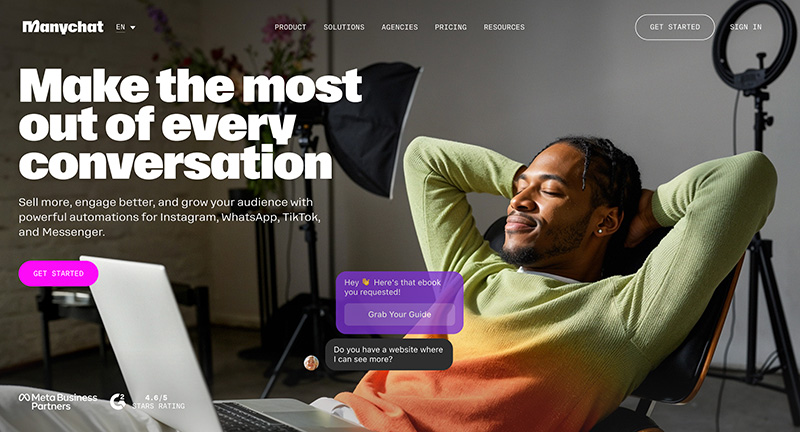
ManyChat offers an accessible no‑code chatbot builder across social channels. Its free plan is limited but Pro tiers scale with contact count, starting at $15/month.
Reviewers highlight its intuitive interface and multi‑channel support, yet caution that the contact‑based pricing and extra fees for WhatsApp/SMS/email can make total costs unpredictable.
| 🔍 Overview | No‑code chatbot and marketing automation platform for DMs across Instagram, Messenger, WhatsApp and SMS. |
| ✨ Features | Drag‑and‑drop flow builder; unlimited custom flows; keyword and non‑keyword triggers; team‑member seats; analytics and segmentation; AI add‑ons for intent recognition and text improvement. |
| 💰 Pricing | Free plan (0 $/mo) supports up to 1 000 contacts; Pro plan starts at $15/month and scales based on number of contacts; Elite plan uses custom pricing. Featurebase notes Pro pricing ranges from $15 for 500 contacts to about $8 k/mo for 2 M contacts, with extra fees for WhatsApp, SMS and email; optional AI add‑on costs $29/month. |
| ✅ Pros | Easy to set up and use; supports multiple social channels; scalable contact‑based tiers; integration with Shopify, Zapier and other tools; optional AI features for better intent recognition. |
| 🔴 Cons | Free plan heavily limited and branded; costs rise quickly as contacts and channels grow; messaging fees for WhatsApp/SMS/Email not included; AI add‑on adds cost. |
| 💬 User Insights | Users like ManyChat’s intuitive builder and cross‑platform support, but warn that contact‑based pricing and channel add‑ons can make it expensive. |
| 🔥 Best For | Small businesses and marketers needing simple DM‑based lead capture and engagement across social platforms; teams comfortable paying per contact and message. |
7. Customers.ai
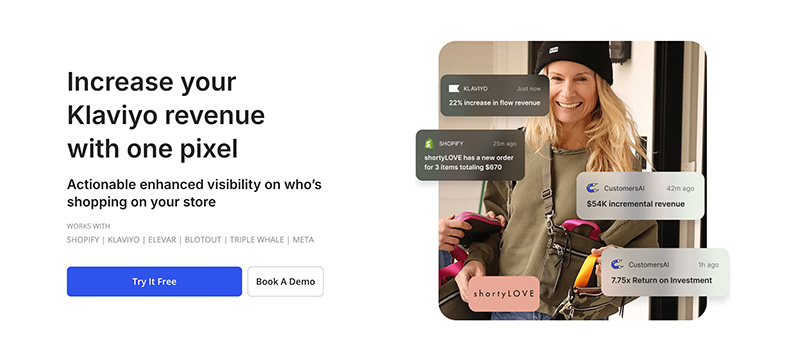
Customers.ai differentiates itself through accurate visitor identification and ad‑platform syncing. Plans begin at $600/month for 3 000 “resolutions” and quickly increase to $1 500/month for 10 000 resolutions.
This makes it attractive for e‑commerce marketers needing precise retargeting, though the steep entry price and usage‑based overages mean it’s better suited for high‑traffic sites.
| 🔍 Overview | B2C outbound marketing and website‑visitor‑identification platform (previously MobileMonkey) that helps identify anonymous visitors, build email lists and automate outreach campaigns. |
| ✨ Features | Identity‑resolution pixel; integrations with ESPs/CRMs and ad platforms (Meta & Google); advanced segmentation and analytics; email marketing and DM automation; 1:1 onboarding support. |
| 💰 Pricing | 7‑day free trial with full feature access; Starter plan $600/mo includes 3 000 visitor resolutions ($0.20 per extra); Grow plan $900/mo with 5 000 resolutions ($0.18 per extra); Scale plan $1 500/mo with 10 000 resolutions ($0.15 per extra); enterprise plan custom pricing. |
| ✅ Pros | Accurate website visitor identification; direct syncing with ad platforms; robust analytics and segmentation; onboarding support; scalable resolution‑based pricing. |
| 🔴 Cons | High entry price (starts at $600/mo); costs increase with visitor volumes; primarily focuses on identity resolution rather than end‑to‑end chatbot interactions; requires sales volume to justify ROI. |
| 💬 User Insights | Early adopters value the ability to identify anonymous visitors and sync to ads but caution that pricing is steep and lead‑guarantee marketing can be aggressive. |
| 🔥 Best For | E‑commerce and marketing teams needing accurate visitor‑ID data and retargeting; businesses with high traffic willing to invest in premium identity resolution. |
8. HubSpot Chatbot Builder
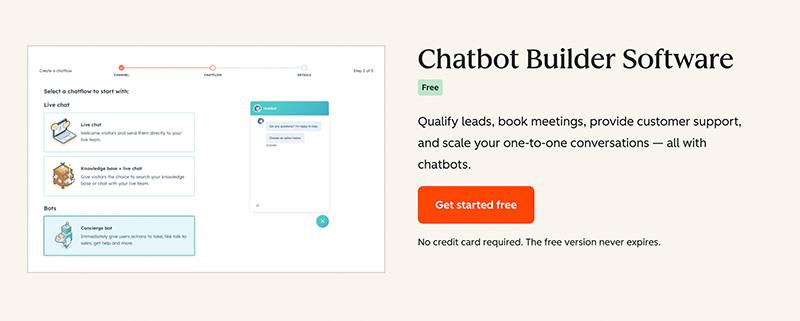
Integrates tightly with the HubSpot ecosystem, offering a free plan for simple chat flows and meeting booking.
However, to unlock advanced automation and reporting, users must upgrade to the Professional ($800/month annual) or Enterprise ($3 600/month) packages. This tiering and dependency on the broader HubSpot suite can limit appeal for those outside its CRM.
| 🔍 Overview | Browser‑based chatbot builder within HubSpot’s CRM platform; automates lead qualification, meeting booking and support conversations. |
| ✨ Features | Live chat widget; programmable chatflows; meeting scheduling; integration with HubSpot CRM and marketing tools; basic AI‑powered responses; drag‑and‑drop chatflow builder; customizable chat widgets. |
| 💰 Pricing | Free plan with limited capabilities; Starter plan from $20/mo (billed monthly) offers live chat, basic conversational bots and email marketing; Professional plan $890/mo ($800 if billed annually) adds teams, advanced automation and custom reporting; Enterprise plan $3 600/mo unlocks full capabilities. |
| ✅ Pros | Free entry-level option; seamless integration with HubSpot CRM; intuitive interface with templates; scheduling and lead‑qualification features; supports omni‑channel (website and FB Messenger). |
| 🔴 Cons | Full feature set requires expensive Professional or Enterprise plans; best used within HubSpot ecosystem; interface can be restrictive; pricing complexity may confuse buyers. |
| 💬 User Insights | Users appreciate the free tool for simple chatflows and meeting booking but note that advanced automation requires costly HubSpot packages. |
| 🔥 Best For | Businesses already using HubSpot CRM looking to add basic chatbots for lead capture and scheduling; firms prepared to upgrade for advanced marketing automation. |
9. Qualified
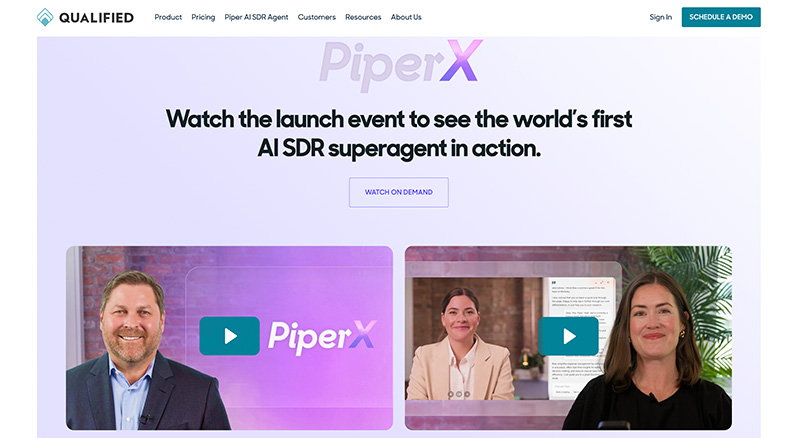
Qualified positions its AI SDR “Piper” as a premium solution for engaging high‑intent website visitors and scheduling meetings.
Pricing is bespoke, with typical list prices around $68 k/year for 25 users negotiable down to ~$40 k. While powerful for pipeline acceleration, its high cost and traffic requirements restrict it to enterprise sales teams.
| 🔍 Overview | AI‑driven conversational marketing platform that deploys “Piper” (AI SDR agent) to engage high‑intent website visitors, schedule meetings and accelerate pipeline. |
| ✨ Features | Live chat, video and voice engagement; AI agent that qualifies visitors and books meetings; integration with Salesforce; multi‑tier packages (Premier, Enterprise, Ultimate); customization and add‑ons such as email/calendar connections and intent signals. |
| 💰 Pricing | Uses custom quotes; typical list price for 25 users is about $68 k/year, negotiable to ~$40 k after negotiation; discounts range 18–53%; multi‑year contracts can provide leverage. |
| ✅ Pros | Targets high‑intent visitors with personalized outreach; AI SDR automates meeting scheduling; strong Salesforce integration; negotiation potential for large accounts. |
| 🔴 Cons | Very expensive compared with other chat platforms; pricing transparency limited; ROI requires significant website traffic; technical setup and negotiation complexity. |
| 💬 User Insights | Few discussions; general sentiment that Qualified delivers quality leads but requires large web traffic and budget to justify. |
| 🔥 Best For | Enterprise sales teams with heavy inbound traffic seeking AI‑assisted SDR to maximize pipeline and willing to negotiate high pricing. |
10. LivePerson
Offers a feature‑rich conversational AI platform with voice‑bots, generative AI and broad channel coverage.
Yet, the absence of public pricing and reports of unverified starting costs around $40 per agent/month—with multiple tiers and potential hidden fees—make budgeting difficult.
| 🔍 Overview | Enterprise conversational AI and messaging platform offering multi‑channel chatbots, voice bots and live‑agent messaging across web, mobile, SMS, email and social channels. |
| ✨ Features | Conversational Cloud with voicebot automations, AI intent manager, conversation builder and orchestrator; multi‑channel agent workspace; analytics tools including Meaningful Conversation Score (MCS) and advanced reporting; Generative AI suite for conversation autocompletion and copiloting. |
| 💰 Pricing | Pricing not public; uses custom quotes based on resolutions (pay‑as‑you‑go or annual). Desku’s research suggests third‑party estimates start around $40 per agent/month but vary widely depending on agent count, channels and AI add‑ons. LivePerson offers Bronze, Silver and Gold tiers, with more channels and AI features at higher tiers. |
| ✅ Pros | Robust omni‑channel capabilities; advanced AI tools for intent detection and generative responses; strong analytics; tailored enterprise solutions. |
| 🔴 Cons | Lack of transparent pricing; potentially high costs with hidden fees; complexity requires onboarding; no free plan. |
| 💬 User Insights | Enterprise users praise deep integrations and analytics but mention that quoting process is opaque and onboarding can be complex. |
| 🔥 Best For | Large enterprises needing sophisticated, AI‑powered conversational commerce across multiple channels and with budget for custom solutions. |
11. SalesAPE
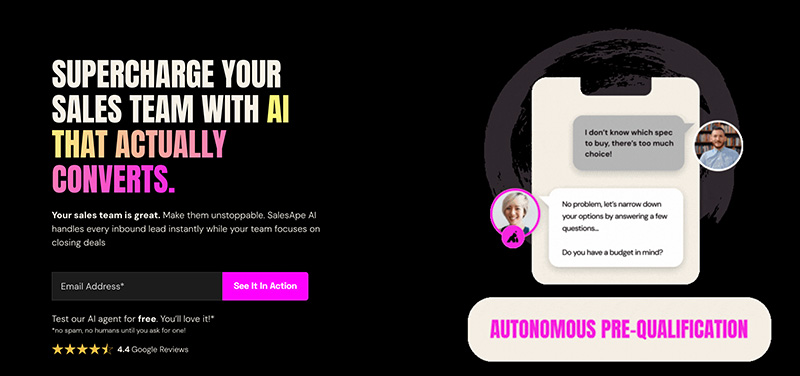
SalesAPE positions itself as a trainable AI SDR that engages and qualifies leads across email, SMS, chat and WhatsApp, booking meetings autonomously.
Its primary appeal lies in replacing human SDRs with a 24/7 agent, but prospective buyers must negotiate pricing (public estimates suggest a $3 k setup and licence fee) and commit to multi‑week onboarding.
| 🔍 Overview | AI‑driven sales assistant that acts as a trainable “AI super‑rep” to engage inbound leads 24/7 and book meetings. |
| ✨ Features | Autonomous lead engagement & qualification across email, SMS, chat and WhatsApp; custom training to emulate top‑performing SDRs; calendar & CRM integration; multi‑channel outreach; analytics & performance insights. |
| 💰 Pricing | Public figures are limited; a third‑party review notes a one‑time AI‑agent setup fee of $3 000 and a $3 000 inbound AI agent licence fee via SalesAPE’s ROI calculator (actual cost confirmed during sales call). |
| ✅ Pros | Provides 24/7 AI SDR that mimics human reps; quick response improves “speed‑to‑lead” conversion; integrates with major CRMs; works across multiple channels. |
| 🔴 Cons | Pricing isn’t transparent and requires contacting sales; setup and onboarding can take several weeks; still emerging, so limited third‑party integrations. |
| 💬 User Insights | Few discussions; small‑business users note that AI assistants can reduce labour costs but express uncertainty about long‑term ROI. |
| 🔥 Best For | SMBs with high lead volumes seeking to automate qualification and scheduling without hiring more SDRs. |
12. Zowie
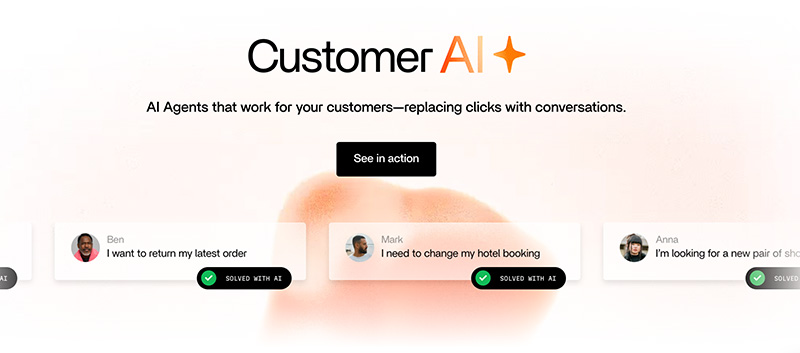
Zowie offers a multilingual omnichannel platform for e‑commerce brands; its AI agents handle chat, email, text and social interactions in 175 languages and automate entire support workflows.
However, outcome‑based pricing is opaque and some users report limited analytics and occasional inaccuracies in responses, making it suitable mainly for mid‑ to large‑size merchants.
| 🔍 Overview | AI‑powered customer‑service platform that automates chat, email, text and social interactions for e‑commerce brands. |
| ✨ Features | Automates complex workflows and delivers AI responses across chat, email, phone and social channels; supports 175 languages; dual AI engine for intent detection and proactive chat; integrates with platforms like Shopify, Magento and Zendesk. |
| 💰 Pricing | Uses outcome‑based, annual contracts where customers pay for the work delivered by AI agents; pricing is custom and requires a sales call, though a free trial is available. |
| ✅ Pros | Omnichannel support with 175‑language coverage; automation of entire support workflows; designed for e‑commerce with proactive sales bots. |
| 🔴 Cons | Pricing is opaque and can be high; some reviewers note that the dashboard offers limited analytics and Zowie sometimes gives incorrect information then escalates to a human agent. |
| 💬 User Insights | Small‑store owners on Reddit often consider Zowie too expensive compared with simpler tools; some complain about limited ability to slice data by segment. |
| 🔥 Best For | Mid‑size to large e‑commerce brands wanting a multilingual customer‑service AI that can automate support across channels. |
13. Chatfuel
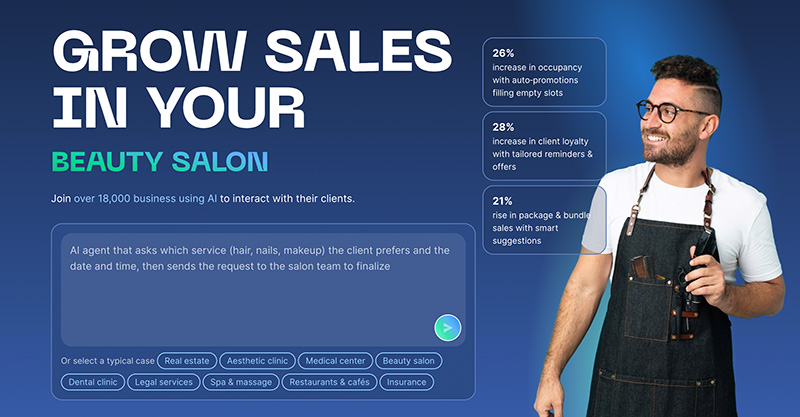
A popular no‑code option for SMEs looking to automate DMs on Facebook, Instagram, WhatsApp and websites.
Plans start around $20/month for 1 000 conversations and scale with usage. While easy to use, its pay‑as‑you‑grow model means multichannel use can become costly, particularly with WhatsApp/SMS add‑ons and higher conversation volumes.
| 🔍 Overview | No‑code chatbot builder that lets businesses create chatbots for Facebook, Instagram, WhatsApp and websites. |
| ✨ Features | Drag‑and‑drop flow builder; built‑in CRM to segment and export leads; templates for popular use cases; multi‑channel support; integrations with Meta ads and e‑commerce platforms. |
| 💰 Pricing | Paid plans start at $20/month for 1 000 conversations on Facebook/Instagram, rising to ~$45 for 2 500 conversations. OMR’s pricing guide lists a Startup plan at €19.99/month (1 000 conversations) and a Small Business plan at €49.99/month (3 000 conversations), with extra conversations charged €0.033–€0.04 each. |
| ✅ Pros | Easy to use for beginners; affordable entry‑level plans; broad social‑media integrations; supports templates and built‑in CRM features. |
| 🔴 Cons | Pricing scales with conversation volume and can become expensive for high traffic; WhatsApp/SMS carry additional costs; enterprise features require custom pricing. |
| 💬 User Insights | Users appreciate the intuitive builder and affordability compared with enterprise tools but caution that multichannel use (especially WhatsApp) can raise costs and there’s no money‑back guarantee. |
| 🔥 Best For | Small businesses and marketers wanting to automate DMs and comments on Meta platforms with a pay‑as‑you‑grow model. |
14. Leadoo
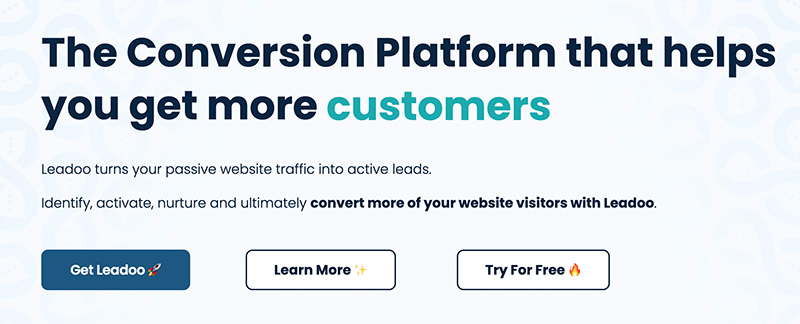
Focuses on conversion optimisation through interactive bots, live chat and analytics.
Its packages, starting at £699/month plus substantial onboarding fees, bundle service and support, making them best for firms willing to invest heavily in conversion tools.
| 🔍 Overview | Conversion platform that uses interactive bots and chat to turn website visitors into leads; includes live‑chat agents and AI elements. |
| ✨ Features | Unlimited conversion tools (chatbots, pop‑ups and forms); live‑chat with 3–10 agents depending on plan; conversion analytics and heatmaps; calendar integration; advanced CRM/email alerts; Leadoo AI with personalised recommendations. |
| 💰 Pricing | Essentials plan £699/month (plus £2 000 onboarding) includes unlimited tools and 3 live‑chat agents; Pro plan £999/month (plus £3 500 onboarding) adds 10 live‑chat agents and calendar integration; Expert plan £1 499/month (plus £5 000 onboarding) adds Leadoo Sales seats, email & CRM alerts, personaliser tools and AI chat quotas. |
| ✅ Pros | Focuses on conversion with a range of interactive tools; comprehensive analytics; includes live‑chat agents and onboarding support; flexible add‑ons like Leadoo Sales and AI chat. |
| 🔴 Cons | High monthly fees and significant onboarding costs; pricing tiers may be prohibitive for SMBs; heavy focus on service packages rather than self‑serve. |
| 💬 User Insights | Some users report improved lead capture but note the high entry price and mandatory onboarding. |
| 🔥 Best For | Companies with sizeable marketing budgets seeking a conversion‑optimised chat platform with dedicated support and live agents. |
15. Heyday
Heyday, now part of Hootsuite, targets retail and e‑commerce brands by automating FAQs, lead capture and dynamic cart creation across messaging channels.
Starting at $499/month, it offers deep e‑commerce integrations and CSAT measurement, but its pricing may limit appeal to larger stores.
| 🔍 Overview | Conversational AI platform (part of Hootsuite) designed for retail brands to automate customer support and drive sales through messaging. |
| ✨ Features | FAQ automation; lead capture via conversational triggers; click‑to‑messenger campaigns; dynamic cart creation; CSAT measurement; omnichannel support across web, mobile, WhatsApp and social channels; integration with e‑commerce platforms like Magento, Prestashop, Salesforce and Shopify. |
| 💰 Pricing | Starts at $499 per month with a free trial. |
| ✅ Pros | Strong integration with e‑commerce platforms; automates FAQs and lead capture; supports multilingual campaigns; provides analytics and CSAT scores. |
| 🔴 Cons | Higher starting price than some SMB‑focused tools; advanced customisation may require Hootsuite subscription; primarily tailored to retail/e‑commerce rather than general B2B. |
| 💬 User Insights | Users praise Heyday’s ability to handle common retail queries and integrate with Shopify but mention that pricing is geared toward larger stores and setup can be complex. |
| 🔥 Best For | E‑commerce and retail brands wanting to automate customer service and sales across messaging channels with deep e‑commerce integrations. |
16. Freshchat
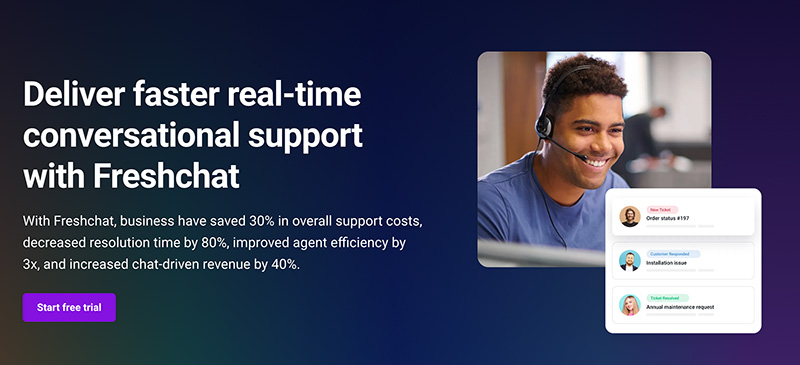
Part of the Freshworks suite, combines live‑chat and AI through Freddy agents.
Its free plan supports up to 10 agents, while paid plans begin at $23 per agent per month and scale to $79 per agent. However, extra bot sessions and AI add‑ons quickly increase costs.
| 🔍 Overview | Part of Freshworks’ Freshdesk suite, Freshchat delivers live‑chat and AI‑bot tools for website and mobile apps. |
| ✨ Features | Live‑chat widget, ticketing and knowledge base; drag‑and‑drop chatbot builder; channels for WhatsApp and Facebook; real‑time dashboards; Freddy AI agent add‑on for automation. |
| 💰 Pricing | Free plan for up to 10 agents with basic ticketing and reporting. Paid plans: Growth at $23/agent/month adds social messaging channels; Pro at $49/agent/month adds advanced bots and analytics; Enterprise at $79/agent/month includes omnichannel routing and priority support. All paid plans include 500 Freddy AI sessions; extra bot sessions cost $100 per 1 000 sessions; Freddy AI Copilot costs $29/agent/month. |
| ✅ Pros | Solid live‑chat platform with free tier; integrates across multiple channels; AI add‑ons for automation; part of a larger CRM suite. |
| 🔴 Cons | Hidden costs for extra bot sessions and AI add‑ons; advanced automation requires higher‑tier plans; best value when used within Freshworks ecosystem. |
| 💬 User Insights | Users appreciate the free plan and Freshworks integration, but note that costs rise quickly with AI sessions and agent counts. |
| 🔥 Best For | Companies already using Freshdesk who need live chat and basic bot automation with the option to add AI sessions. |
17. Instabot
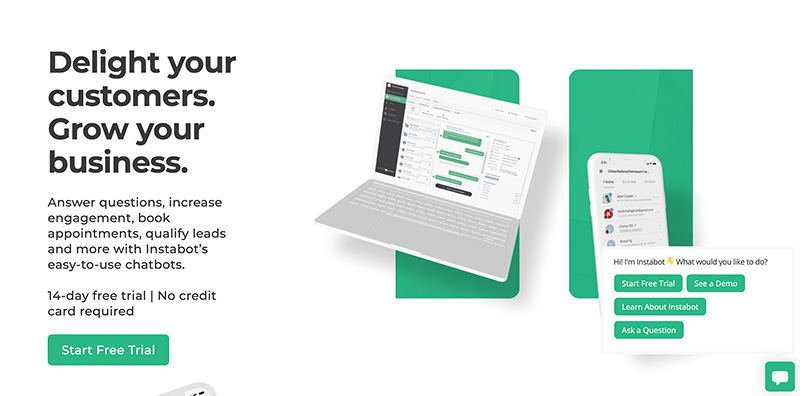
Offers customisable chatbots and live chat with features like MAU‑based tiers, marketing attribution and SMS add‑ons.
Pricing information is limited, but guides suggest a starting rate around $49/month (annual) for the base plan, with higher tiers requiring quotes.
| 🔍 Overview | Conversational marketing platform that provides chatbots and live‑chat tools to engage website visitors, qualify leads and schedule meetings. |
| ✨ Features | Tiered plans (Base, Standard, Advanced, Enterprise) with increasing monthly active users and chatbots; built‑in analytics, marketing attribution, segmentation, live chat and calendar integration; supports integrations with Zapier, Facebook Messenger, Salesforce and Dialogflow. Text messaging add‑on provides a 10‑digit business line ($50 one‑time) and 500 SMS messages with auto‑renew bundles at $15 per 500 messages. |
| 💰 Pricing | According to a 2025 pricing guide, the Base plan starts around $49/month (annual billing) for up to 5 000 monthly active users. Standard and higher tiers require a quote; all plans include a free trial but no permanent free tier. |
| ✅ Pros | Offers multiple chatbots and MAU tiers; includes robust analytics and integrations; SMS add‑on extends reach; suitable for businesses wanting custom bots built by the Instabot team. |
| 🔴 Cons | Pricing not fully transparent; costs increase with MAU and chatbot counts; advanced tiers require contacting sales; no perpetual free plan. |
| 💬 User Insights | Limited chatter; some marketers note value in the SMS add‑on, while others find the pricing steep relative to simpler tools. |
| 🔥 Best For | Mid‑sized companies seeking customizable chatbots, analytics and SMS capabilities, with moderate to high website traffic. |
18. Botsonic
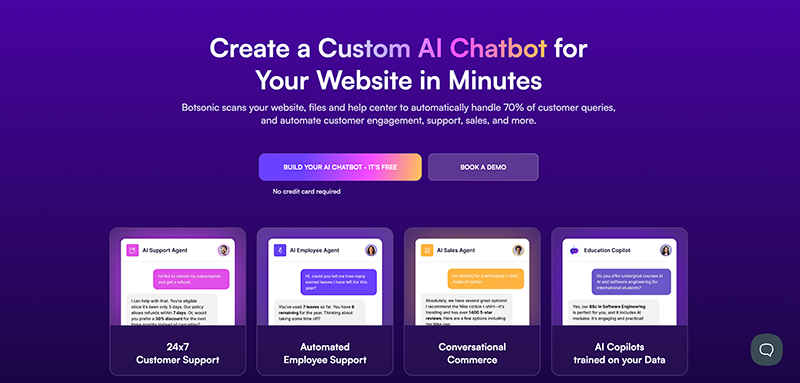
Primarily an AI content and SEO suite rather than a pure lead‑generation bot.
Its plans (Lite, Standard, Professional, Advanced, Enterprise) range from $39 to $399 per month when billed annually and offer AI writing, SEO audits, and AI search visibility.
| 🔍 Overview | Writesonic is primarily an AI content and SEO platform; its Chatsonic component offers an AI marketing agent for conversational interactions, idea generation and content drafting. |
| ✨ Features | AI article writing and SEO auditing; AI search visibility (GEO) to track brand presence across chat platforms; Chatsonic for AI chat and marketing assistance; integration with tools like Google, Ahrefs and Semrush; supports multiple AI models and content workflows. |
| 💰 Pricing | Annual plans: Lite $39/month (aimed at freelancers) with limited article generations and unlimited Chatsonic access; Standard $79/month adds more AI article generations and unlimited AI agent generations; Professional $199/month increases article generations and includes additional users/projects; Advanced $399/month offers daily AI search tracking and higher quotas; Enterprise plan is custom. |
| ✅ Pros | Combines content creation, SEO and conversational AI in one platform; flexible plans for individuals up to enterprises; Chatsonic offers GPT‑4‑like conversational capabilities for marketing. |
| 🔴 Cons | Focused more on content/SEO than dedicated lead‑generation chat; higher‑tier plans needed for AI search tracking and advanced analytics; costs can be high for small businesses. |
| 💬 User Insights | Marketers like Chatsonic for brainstorming and quick copy, but note that the tool is better suited to content generation than lead capture. |
| 🔥 Best For | Content marketers and SEO teams seeking integrated AI writing, SEO auditing and conversational assistance rather than pure lead‑gen chatbots. |
19. Landbot
Drag‑and‑drop bot creation for web and WhatsApp. A free plan allows 100 chats per month, while paid plans start at $46/month and include features like A/B testing, lead scoring and broad integrationslandbot.iolandbot.io.
Users appreciate its intuitive interface but warn that chat limits and channel add‑ons can drive up costs.
| 🔍 Overview | Drag‑and‑drop chatbot builder that lets users create web and WhatsApp chatbots without coding; focuses on conversion funnels and interactive forms. |
| ✨ Features | Flow‑builder with variables, conditions, A/B testing, lead scoring and hidden fields; built‑in integrations with Zapier, Slack, SendGrid, Google Analytics, Mailchimp, Stripe, HubSpot and Salesforce; live‑chat takeover, persistent menus and custom branding options; support resources include academy, knowledge base and community. |
| 💰 Pricing | Chatimize’s 2025 review notes a free plan with 100 chats per month and limited integrations; paid plans start at $46/month and scale based on chat volume and features. WhatsApp‑specific plans (Starter/Pro) and Business plans add extra channels and higher chat limits; pricing details are found on Landbot’s site but require sign‑in. |
| ✅ Pros | User‑friendly visual builder; broad integration ecosystem; supports both web and WhatsApp bots; includes A/B testing and lead‑scoring features. |
| 🔴 Cons | Free plan has low chat limits; pricing escalates with chat volume and number of channels; full feature set requires higher tiers; integration with WhatsApp adds additional costs. |
| 💬 User Insights | Users praise Landbot’s intuitive builder and flexibility but mention that chat limits on lower plans can be restrictive and that WhatsApp add‑ons are expensive. |
| 🔥 Best For | Teams wanting to craft interactive funnels and lead‑qualification bots with minimal coding, and who need both web and WhatsApp deployments. |
20. Soprano
Soprano delivers an enterprise communication platform offering SMS, voice and email messaging across 30+ channels and 60+ languages.
Pricing is largely undisclosed, with estimates starting around $25/month for basic SMS services. It is best suited for large organisations requiring secure, omni-channel messaging and conversational AI at scale.
| 🔍 Overview | Soprano Design provides a cloud communication platform and conversational AI tools for messaging at scale, including SMS, voice and email. |
| ✨ Features | Supports 2‑way messaging, campaign scheduling, contact management and automated responses; offers 30+ channels and 60+ languages for voice and text interactions; enterprise‑grade security and compliance; analytics and custom metrics for conversation performance. |
| 💰 Pricing | Pricing is not publicly disclosed; plan comparison pages list Business (up to 500 contacts), Enterprise (up to 2 500 contacts) and Corporate (up to 10 000 contacts). Some third‑party sources estimate domestic SMS pricing starting around $25/month, with additional fees for international messaging and voice services. Exact costs require contacting sales. |
| ✅ Pros | Offers omnichannel messaging and conversational AI across numerous languages; scalable for enterprise campaigns; includes analytics and security features. |
| 🔴 Cons | Lack of transparent pricing; complex plan structure by contact count; primarily marketed to large enterprises; limited public reviews. |
| 💬 User Insights | Minimal Reddit discussion; some commenters highlight that Soprano is geared toward large-scale SMS marketing and may be overkill for small businesses. |
| 🔥 Best For | Large organisations needing secure, compliant messaging and conversational AI across multiple channels and global regions. |
How to pick the best AI chatbot for lead generation
A great lead generation bot can do a lot more than just collect names. Here is some actionable criteria I use when architecting lead-gen bots:
- CRM and stack fit over features.
- Define your “qualified lead” upfront.
- Channel matters.
- Use good hand-off logic.
- Iterate and optimise continuosly.
Make sure to define what success looks like, and use this as your KPI when assessing whether or not the chatbot is working well for lead gen.
We like to define client success using the cost per acquisition (CPA) metric – How much it costs to get a new lead.
We have found this to be the most effective measure of return in most cases.
Have you tried AI chatbots for lead generation yet?